
Travel Pram with a baby can be equal parts exciting and overwhelming. One moment you are planning scenic walks, beach days and urban explorations, and the next you are wondering how on earth you will manage pram folding, airport security, nap schedules and luggage all at once. A travel pram solves a huge part of that challenge. Lightweight, compact and designed specifically for portability, a travel pram helps parents move seamlessly through airports, hotels, crowded streets and public transport – without compromising comfort and safety for the child.
Whether you are planning an overseas holiday, interstate travel, or simply need a pram that fits easily into your car boot or urban lifestyle, this guide breaks down everything you need to know. From features to look for, top benefits, buying tips, safety considerations, and maintenance advice – here is a complete, deep-research resource to help you make an informed choice before investing in a travel pram.
What Is a Travel Pram
A travel pram is a stroller designed to be more compact and lightweight than standard prams. It is easy to fold, store and carry – ideal for families who travel frequently or need a space-saving option. Unlike bulky full-size prams, travel prams are engineered for mobility. Many models fit into airplane overhead compartments, car trunks, and even under café tables.A travel pram can be a parent’s best companion on holidays, day outings, shopping trips and throughout busy city life. It combines convenience with infant comfort, making movement smoother and less stressful.
Why Choose a Travel Pram Over a Standard Pram
Many parents purchase a travel pram even if they already own a full-size stroller. The reason is simple: standard prams are not designed for flight travel, narrow pathways or lightweight portability. They are ideal for durability and long-term use but not for fast, flexible movement.
Key advantages of a travel pram include:
• Portable and lightweight – usually between 5-9 kg
• Quick folding mechanism – ideal for airports, taxis and public transport
• Compact storage – saves space at home and while travelling
• Easy to lift and carry – especially helpful when travelling solo
• Comfortable for baby naps and long walks
• Some models are cabin-friendly for airplanes
If you want stress-free mobility without dragging heavy equipment everywhere, a travel pram is the smarter option.
Features to Look for When Buying a Travel Pram
Every model is different. The right choice depends on your child’s age, type of travel, budget and usage frequency. Below are the most important features to compare.
1. Weight & Portability
The best travel prams are lightweight enough to carry in one hand. A low-weight design is especially useful when climbing stairs, boarding trains or walking through busy airports.
2. Easy Fold System
Look for one-hand fold or single-step collapse prams. The faster you can open and fold, the more convenient your travel experience becomes.
3. Compact Size When Folded
Cabin-approved prams are ideal for flying. They fit in airplane overhead storage so you don’t have to check them in. Even non-cabin size prams should fold small enough to store easily.
4. Recline & Comfort
Babies nap frequently during travel. A good travel pram should offer multi-position recline, cushioned seats and strong head support.
5. Safety Harness
A 5-point harness is recommended for secure stroller seating. This ensures your child stays safe while moving through rough or uneven pathways.
6. Wheels & Suspension
Big wheels offer better stability outdoors, while smaller wheels work fine for indoor and smooth use. Suspension matters for bump-free rides, especially during city sightseeing.
7. Sun Canopy / Rain Cover
Weather protection is essential. Look for UPF-protected canopy, extendable hoods, and compatibility with rain covers or wind shields.
8. Storage Basket & Pockets
Diapers, bottles, snacks, toys – travel comes with essentials. A spacious storage basket makes outings easier and hands-free.
9. Newborn or Toddler Compatibility
Some prams are suitable only from 6 months onward. Check guide compatibility if you plan to use it for a newborn.
10. Budget
Travel prams range from low-cost to premium luxury models. Invest in long-term usability rather than just choosing the cheapest option.
Popular Types of Travel Prams
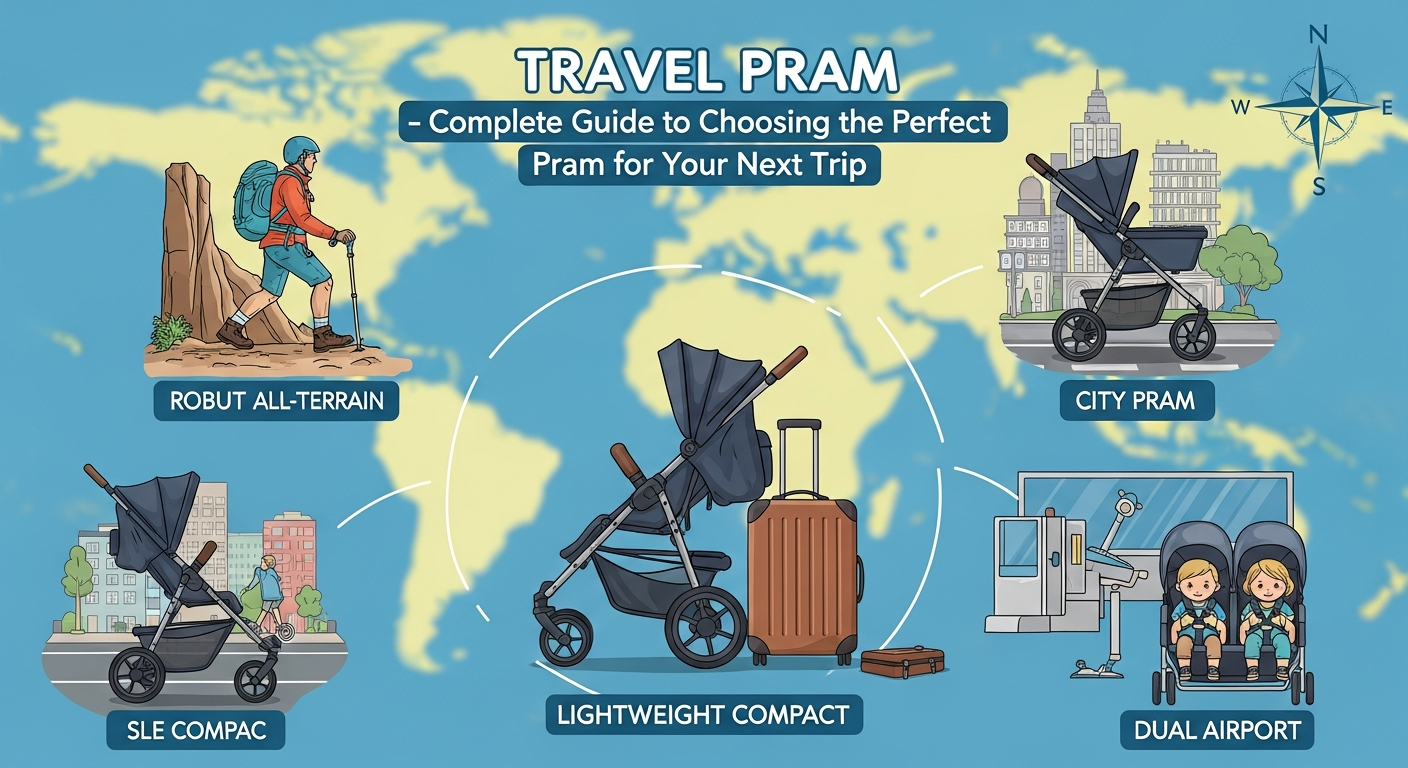
• Ultra-Lightweight Travel Strollers
Perfect for plane travel and city movement. Ideal for short trips with toddlers.
• Compact Fold Cabin Prams
Engineered to meet airline cabin size limits. Allows you to keep your pram with your carry-on luggage.
• All-Terrain Travel Prams
Suitable for uneven footpaths, parks, cobblestones, beach boardwalks and outdoor exploration.
• Convertible Travel Systems
These allow car seat attachment and sometimes bassinet integration – best for newborns and long travel durations.
How to Use a Travel Pram When Flying
Travelling by air with a baby becomes easier when you have a foldable travel pram. Here are steps to ensure smooth airport handling:
- Check whether your pram is airline cabin-approved.
- Fold the pram at security checkpoints and gate entries.
- Keep harness tight during boarding and exiting.
- If pram isn’t cabin size, it will be gate-checked and returned after landing.
- Use pram organisers to store passports, milk bottles, wipes and boarding passes.
Cabin-fit prams remove baggage claim delays and let your child rest instantly after landing.
Tips to Maintain Your Travel Pram
Like any baby product, travel prams need regular care.
• Clean fabric frequently to avoid bacteria buildup.
• Lubricate wheels for smooth steering.
• Store in a travel bag to prevent scratches.
• Avoid overloading weight beyond recommended limit.
• Check brakes and frame stability after long flights.
Proper maintenance ensures long-lasting use and safety.
Who Should Buy a Travel Pram?
A travel pram is ideal for:
• Parents who travel frequently (air/road trips)
• Families living in city apartments with limited storage
• Parents using public transportation often
• Anyone needing a second pram for convenience
• Parents who want a lightweight backup stroller
If mobility and simplicity are priorities, a travel pram is the best solution.
Pros and Cons of Travel Prams
Pros
- Lightweight and portable
- Compact folding design
- Suitable for airports, shopping and urban areas
- Comfortable for naps and long walks
- Saves storage space
Cons
− Less durable than full-size prams
− Smaller wheels may struggle on rough terrains
− Basket storage may be limited in some models
− Not all travel prams are newborn-friendly
Yet for parents prioritising convenience and travel ease, the benefits outweigh the limitations.
Buying Checklist – Quick Summary Before You Purchase
| Feature | Must-Have Consideration |
| Weight | Under 7-9 kg if possible |
| Fold Type | One-hand fold preferred |
| Airline Suitability | Cabin size if flying |
| Seat Comfort | Padded + reclining |
| Harness | 5-point safety system |
| Wheels | Suspension + stability |
| Storage | Basket + pockets |
| Canopy | UPF protection |
Ticking these points ensures you invest wisely.
Conclusion
A travel pram is more than a stroller – it’s a mobility tool that simplifies travel with children. Whether you’re hopping between airports, sightseeing in new cities, or navigating through crowded marketplaces, the right travel pram offers comfort, convenience, and stress-free movement. By focusing on weight, foldability, safety, comfort and compactness, parents can choose a pram that makes every trip smoother.
If you travel often or need space efficiency at home, owning a travel pram is a smart and worthwhile investment. It allows you to explore the world with confidence while your child rests securely by your side.
FAQs
Q1. Can I take a travel pram on an airplane?
Yes, many travel prams are cabin-approved. Check size specifications before flying.
Q2. Are travel prams suitable for newborns?
Some are, but not all. Choose a model with a newborn insert or bassinet compatibility.
Q3. What weight is best for a travel pram?
Most parents prefer 5-9 kg for easy portability.
Q4. Do travel prams compromise comfort?
No. Good models include recline features, padding and smooth wheels for comfort.
Q5. Should I buy a travel pram if I already have a regular stroller?
Yes, if you travel frequently or need a lightweight urban option.